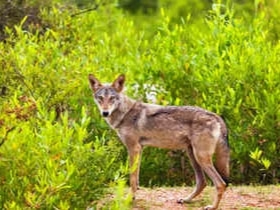
India’s wilderness often conjures images of prowling tigers and trumpeting elephants — but hidden within the open grasslands of the subcontinent lives one of its most mysterious predators: the Indian wolf (Canis lupus pallipes). Unlike its forest-dwelling counterparts, this species thrives in semi-arid landscapes, scrublands, and plains that have long been overlooked in conservation efforts.
Recent reports from 2025 and 2026 have reignited interest in these shy carnivores, including sightings near Delhi and studies showing that many wolves live perilously close to human settlements. With an estimated population of just around 3,000 individuals, spotting an Indian wolf in the wild is truly a privilege.
1. Velavadar Blackbuck National Park, Gujarat
Known as India’s miniature savannah, Velavadar is one of the most reliable destinations for wolf sightings. The park’s sweeping grasslands are dotted with blackbucks and harriers — setting the stage for the Indian wolf, which is most active at dawn. This predator-prey balance makes Velavadar a unique and photogenic wildlife experience, especially during winter and early mornings.
2. Solapur–Pune Region, Maharashtra
The semi-arid terrain of the Deccan Plateau shelters one of India’s largest wolf populations. Around Solapur and Kadbanwadi near Pune, wolves often wander beyond protected reserves, offering rare insights into how they adapt to human-altered landscapes. For wildlife photographers and researchers, these areas offer an unmatched opportunity to observe free-roaming packs in natural yet unconventional settings.
3. Jawai Hills, Rajasthan
Better known for its leopard safaris, Jawai has recently emerged as a surprising hub for wolf sightings. The rugged granite hills and sparse vegetation create ideal conditions for wolves avoiding human disturbance. Sightings remain rare, but early morning safaris across open plains might reveal fleeting glimpses of this desert-dwelling predator.
4. Mahuadanr Wolf Sanctuary, Jharkhand
India’s only dedicated wolf sanctuary lies in Jharkhand’s Palamau district. The grassland plateaus here are known for wolf dens and long-term pack presence. Though it remains relatively inaccessible and under-explored, Mahuadanr stands as a cornerstone for wolf conservation — a must-visit for serious wildlife enthusiasts and researchers.
5. Melkote and Ranibennur Region, Karnataka
In the southern states, Melkote Temple Wildlife Sanctuary and Ranibennur Blackbuck Sanctuary provide refuge to small wolf populations. These wolves thrive in open scrublands and feed on hares and small ungulates. Reports from recent field surveys highlight their growing adaptation to the dry landscapes of Karnataka, where scenic temple architecture meets natural wilderness.
6. Nauradehi Wildlife Sanctuary, Madhya Pradesh
Central India’s Nauradehi Sanctuary remains lesser-known but promising. Its mix of deciduous forests and undisturbed grassland is ideal habitat for wolves. While sightings are infrequent, explorers often describe the eerie silence of dawn or dusk safaris — moments when the chance of encountering these elusive animals is highest.
7. Yamuna Floodplains, North Delhi
Perhaps the most surprising location for wolf sightings in recent years, the Yamuna floodplains near Palla have hosted rare appearances between 2025 and 2026. These wolves — possibly dispersing individuals — symbolize resilience and adaptability in fragmented habitats near one of India’s busiest urban centers.
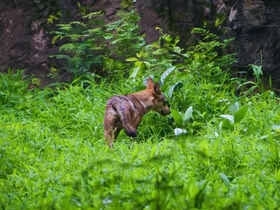
The Indian wolf’s survival story unfolds across India’s grasslands and scrublands — ecosystems often overshadowed by forests and jungles. To spot one is to witness the fragile coexistence between predator and prey, wilderness and humanity. Supporting conservation of these landscapes isn’t just about protecting an animal; it’s about preserving the soul of India’s lesser-known wild spaces.
ALSO READ : Exploring the Rich Wildlife of Begur National Park in Wayanad